★ Analysis · UX · Usability
The same exact step, choosing how to receive a refund, on two e-commerce giants. One gives you a nudge and asks for confirmation; the other reopens a choice you had already made.
There is a step every e-commerce has, and that almost nobody looks at closely: the one where, after a return, you choose how to get your money back. The options are nearly always two: a refund to the original payment method, or a refund to the store’s internal credit.
For the company the two routes are not remotely equivalent: internal credit is money that stays home, and that will almost always end up spent there. Which is why this step is the perfect place to observe the temperament of whoever designs it: the temptation to push you toward the credit is enormous, and everyone handles it their own way.
In November 2024 I made two returns, one on Amazon and one on Temu, and I found the very same step handled with two very different temperaments. The observations date to those days: things may have changed since. The measures come from the Darkometer, as usual.

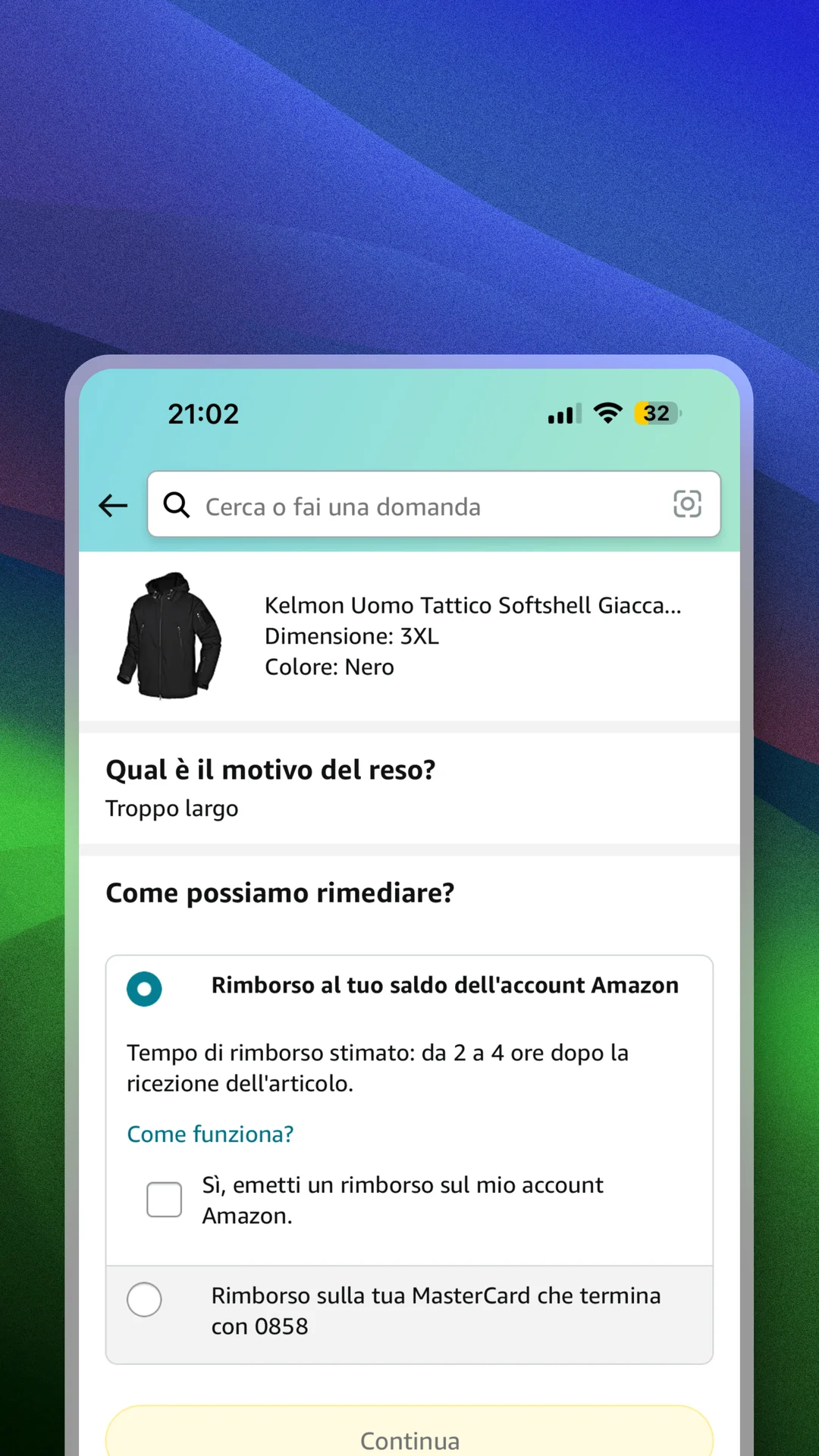
Of the two options, the first, which just so happens to be the most convenient for Amazon, comes pre-selected. So far we would be in dark-lord territory. But look closer: to proceed with that choice you must tick a box that says “Yes, issue a refund to my Amazon account”. An explicit, mandatory confirmation, impossible to skip.
That confirmation is what saves Amazon from the Moderate zone. Although, let’s be honest: how many of you tick boxes to move on without really reading?
That said, I speak from personal experience: I shop on Amazon often and with confidence, and sooner or later a balance sitting there gets spent. The real damage, for me, is low.
The nudge with a confirmation: level 2, the henchman’s zone
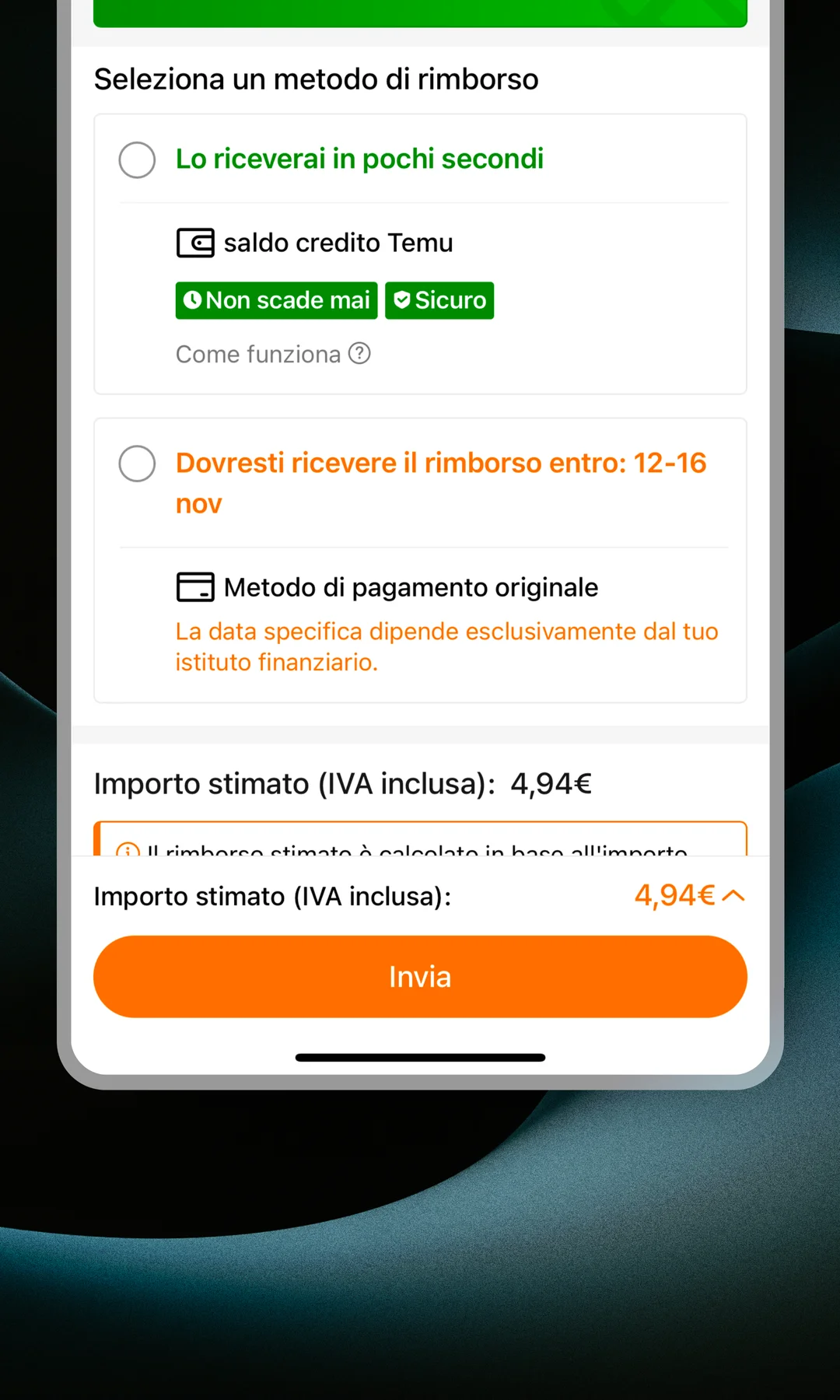
The Temu return starts by the book. Look at this step:
No pre-selection: the two options sit there, on equal footing, and the choice is yours. Worthy of applause. If the flow ended here, this article would not exist.
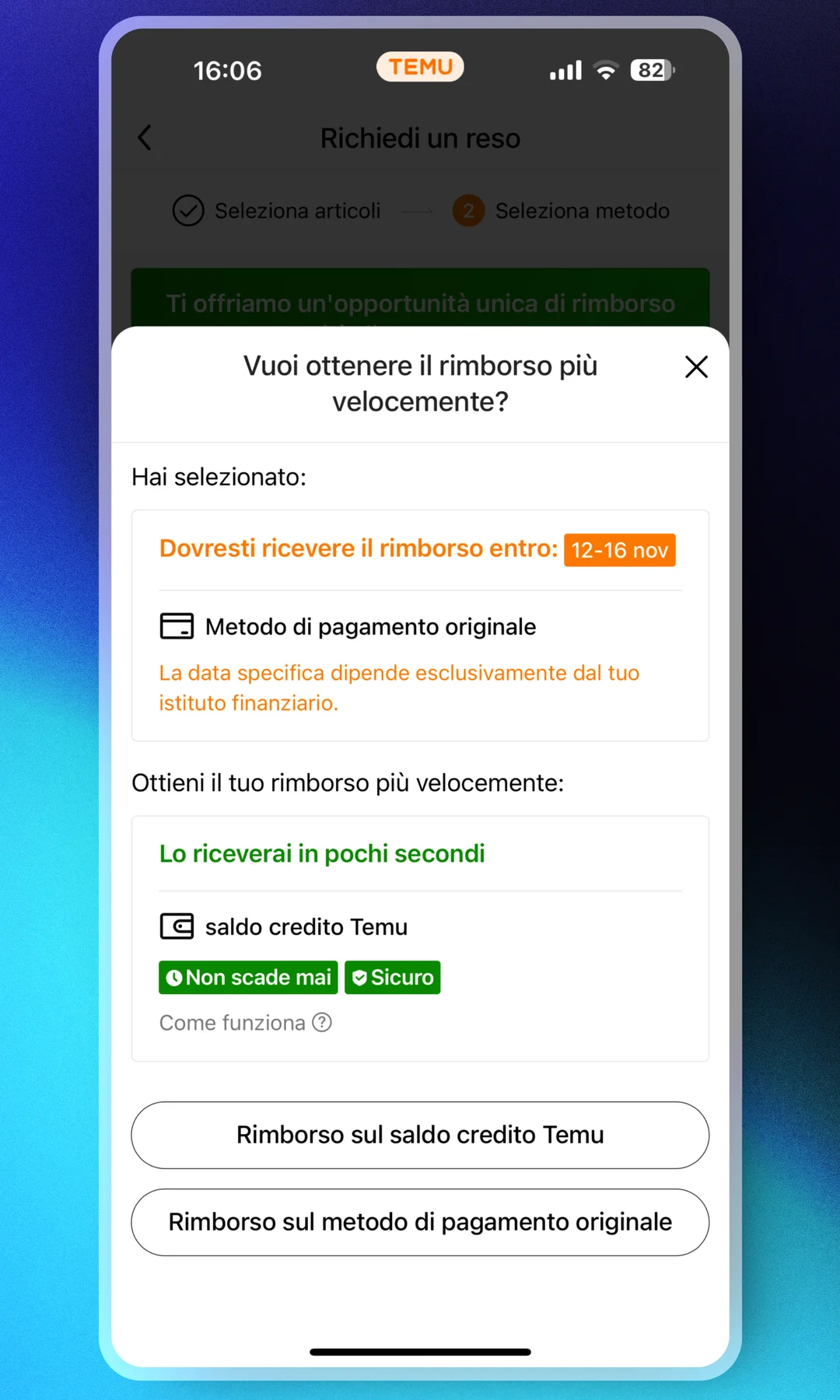
But then you pick the original payment method, press Submit, and this appears:
A dialog that re-asks a question you have just answered. With three aggravating factors:
And here my personal experience is the opposite: I shop on Temu rarely and with little confidence, and money locked in there would weigh on me three times as much. A steered choice after a choice already made is not a nudge: it is insistence dressed up as help.
The re-asked question: level 4, the dark lord’s zone
Same step, two temperaments. There is the one who gives you a nudge and then looks you in the eye asking for confirmation, and the one who waits until the last moment to reopen what you had already decided. Neither is a demon; but the difference in respect is unmistakable.
And I am left with half a paradox: the more elegant pattern belongs to the company that needs to hold on to your money the least. Maybe that is no accident. Trust is built in details like these too, and it is precisely that trust that makes an internal balance nothing to fear.
What about you? When a refund comes your way, do you check where it is going, or is the box already ticked?